문제 링크
요약
- Trie 사용하는 풀이를 생각해보자.
최종
결과
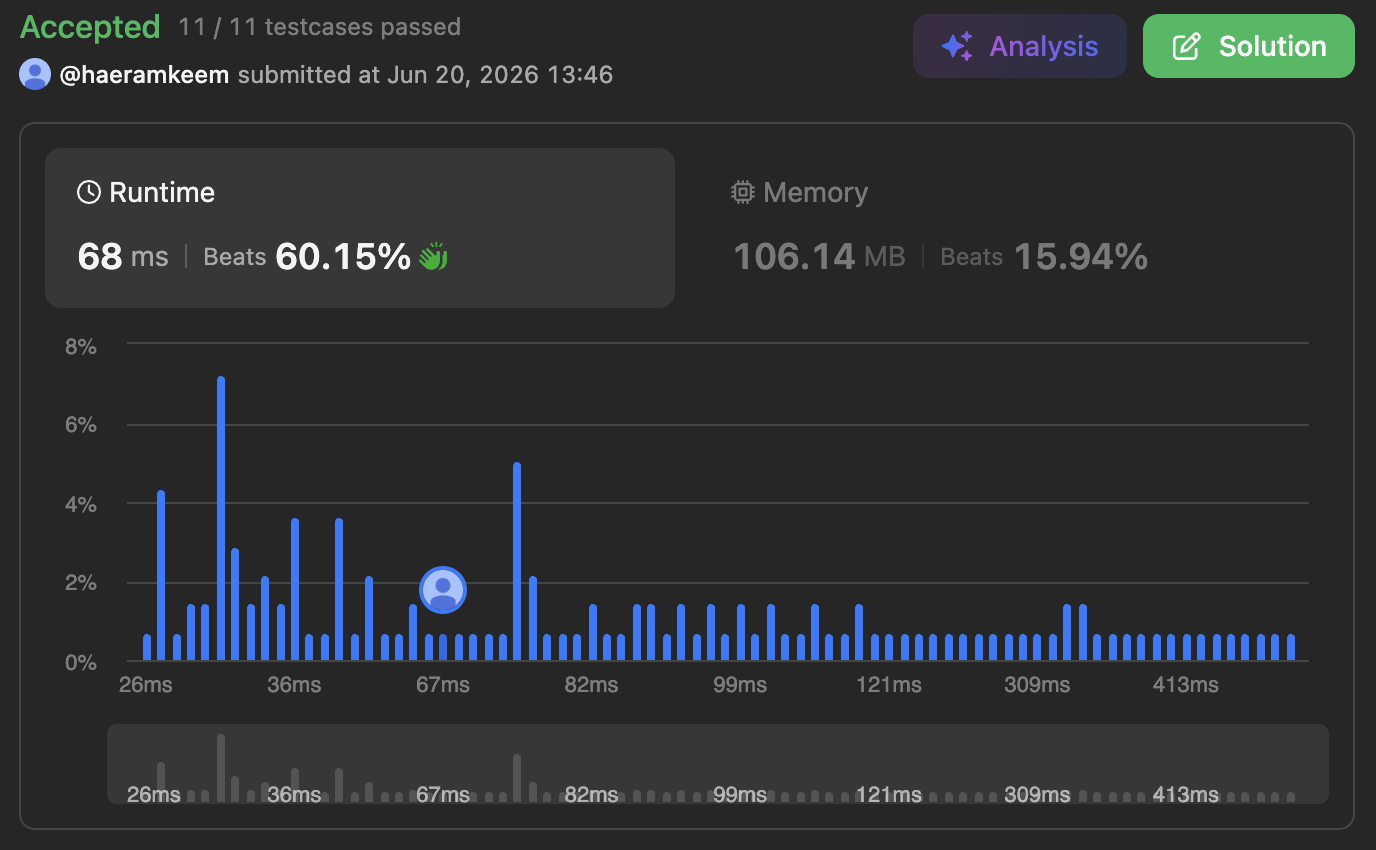
- 솔직히 현실적인 풀이법은 아래에 적어두었으니, 속도가 더 빠른 Trie 접근법을 알아보자.
- 물론 다른사람들 풀이에 비해서는 좀 느리긴 하지만 그래도 이정도면 인정이지
- 요약하면,
words로 trie 를 build 하고puzzles의 각 원소에 대해 이 trie 를 bfs 하면 된다. - 코드를 보자.
#define bms unsigned int

class SortedTrieNode {
	SortedTrieNode *children['z' - 'a' + 1];
	int cnt;
public:
	SortedTrieNode() {
		for (int i = 0; i < 'z' - 'a' + 1; i++) {
			children[i] = NULL;
		}

		cnt = 0;
	}

	~SortedTrieNode() {
		for (int i = 0; i < 'z' - 'a' + 1; i++) {
			if (children[i]) {
				delete children[i];
			}
		}
	}

	void insert(string &arg) {
		// Build BMS to unique-sort
		bms s = 0;

		for (char c : arg) {
			s |= 1 << (c - 'a');
		}

		// Append Trie nodes for the unique-sorted arg
		SortedTrieNode *it = this;
		for (int i = 0; i < 'z' - 'a' + 1; i++) {
			if ((s >> i) & 0x1) {
				if (!it->children[i]) {
					it->children[i] = new SortedTrieNode();
				}

				it = it->children[i];
			}
		}

		// The arg is inserted; increase the cnt
		it->cnt++;
	}

	int getTotalWordCnt(string &arg) {
		// Build BMS
		bms s = 0;

		for (char c : arg) {
			s |= 1 << (c - 'a');
		}

		// Do BFS
		queue<pair<SortedTrieNode*, bool /* Condition */>> q;
		int ret = 0;

		q.push({this, false});

		while (!q.empty()) {
			auto p = q.front();
			auto cur = p.first;
			q.pop();

			if (p.second) {
				ret += cur->cnt;
			}

			for (int i = 0; i < 'z' - 'a' + 1; i++) {
				if (cur->children[i] && ((s >> i) & 0x1)) {
					bool condition = p.second | (i == (arg[0] - 'a'));
					q.push({cur->children[i], condition});
				}
			}
		}

		return ret;
	}
};

class Solution {
public:
	vector<int> findNumOfValidWords(vector<string>& words, vector<string>& puzzles) {
		SortedTrieNode root;
		vector<int> ans;

		// Build Trie
		for (auto &w : words) {
			root.insert(w);
		}

		// Get & push word cnt
		for (auto &p : puzzles) {
			ans.push_back(root.getTotalWordCnt(p));
		}

		return ans;
	}
};- 코드 설명
SortedTrieNode::insert()- 일반적인 trie 랑 비슷하게 하면 되는데, 다른점은:
- 우선
arg를 unique sorting 해야 한다. unique 해야 하는 이유는words의 각 원소들의 character 들이puzzles의 원소와 비교될때는 unique character 를 비교하기 때문이고, sorting 해야 하는 이유는 trie 의 node 수를 줄이기 위해서이다.- 위 코드에서는 unique sorting 을 할 때 BMS 를 사용했다.
- 그리고 trie 에서는 보통 end of word 인지 체크하는 bool 을 사용하지만, 여기서는 각 word 의 개수가 필요하기 때문에 counter 가 들어간다.
- 우선
- 일반적인 trie 랑 비슷하게 하면 되는데, 다른점은:
SortedTrieNode::getTotalWordCnt()- 이 함수에
puzzles의 원소를 넣으면 bfs 를 돌려서 word 의 개수를 뽑아내게 된다.L48-L53: 우선,arg(인자로 들어온puzzles의 원소) 를 bms 로 만든다.L56: 그리고 bfs 를 할때는 각 node pointer 와 condition flag 를 queue 에 넣는다.- 문제의 조건 상
arg의 첫번째 character 가 word 에 등장해야 하기 때문에, 등장했는지의 state 를 추적하기 위한 condition flag 를 추가로 넣어주는 것. - 이 condition 을 바꾸는 건
L72에서 처리한다.
- 문제의 조건 상
L66-L68: Queue 에서 뺀 현재의 놈을 처리할 때는, 이놈의 condition flag 를 보고 조건을 만족하였는지 확인한 다음 만족할 때만 cnt 를 누적한다.L71: Queue 에서 하나 빼서 다음 children 으로 넘어갈 때는, 존재하는 children 중에서arg에 존재하는 character 에 대해서만 children 에 넣는다. 이때L48-L53에서 생성한 bms 를 사용한다.
- 이 함수에
삽질기록
Bitmap 접근
words에 있는 모든 애들을 BMS 로 바꾸고,puzzles하나하나에 대해 bms 로 바꾼 것과 비교해서 세어주면 되긴 한다.- 즉,
words의 한 원소w를 bms 로 바꾸었을 때를ws라고 하고 puzzles의 한 원소p를 bms 로 바꾸었을 때를ps라고 했을 때- 우선
ws에는p의 첫번째 character 가 포함되어있어야 하고 ws & ps한 결과가ws와 같아야 한다. 다르다면ws가ps에 포함되지 않다는 뜻이므로.
- 즉,
코드
#define bms unsigned int

class Solution {
public:
	vector<int> findNumOfValidWords(vector<string>& words, vector<string>& puzzles) {
		vector<bms> words_set;
		vector<int> ans;

		for (auto &w : words) {
			bms b = 0;

			for (char c : w) {
				b |= 1 << (c - 'a');
			}

			words_set.push_back(b);
		}

		for (auto &p : puzzles) {
			bms ps = 0;
			int cnt = 0;

			for (char c : p) {
				ps |= 1 << (c - 'a');
			}

			for (bms ws : words_set) {
				if (ws & (1 << (p[0] - 'a'))) {
					if ((ws & ps) == ws) {
						cnt++;
					}
				}
			}

			ans.push_back(cnt);
		}

		return ans;
	}
};
- 근데 돌려보면 timeout 난다. 당연히
words와puzzles의 원소를 비교하는 경우의 수가 이기 때문. - 그래서 최적화를 해보자:
wordsvector 를 bms vector 로 바꾸지 말고, bms map 으로 바꾸는 것.- 즉, 같은 bms 를 갖는 값들을 하나로 묶어 map 에는 (bms -> 원소 개수) pair 을 저장하게 하는 것.
- 이후 map 안의 모든 pair 를 순회하며 위의 방법대로 count 를 하면 된다.
결과
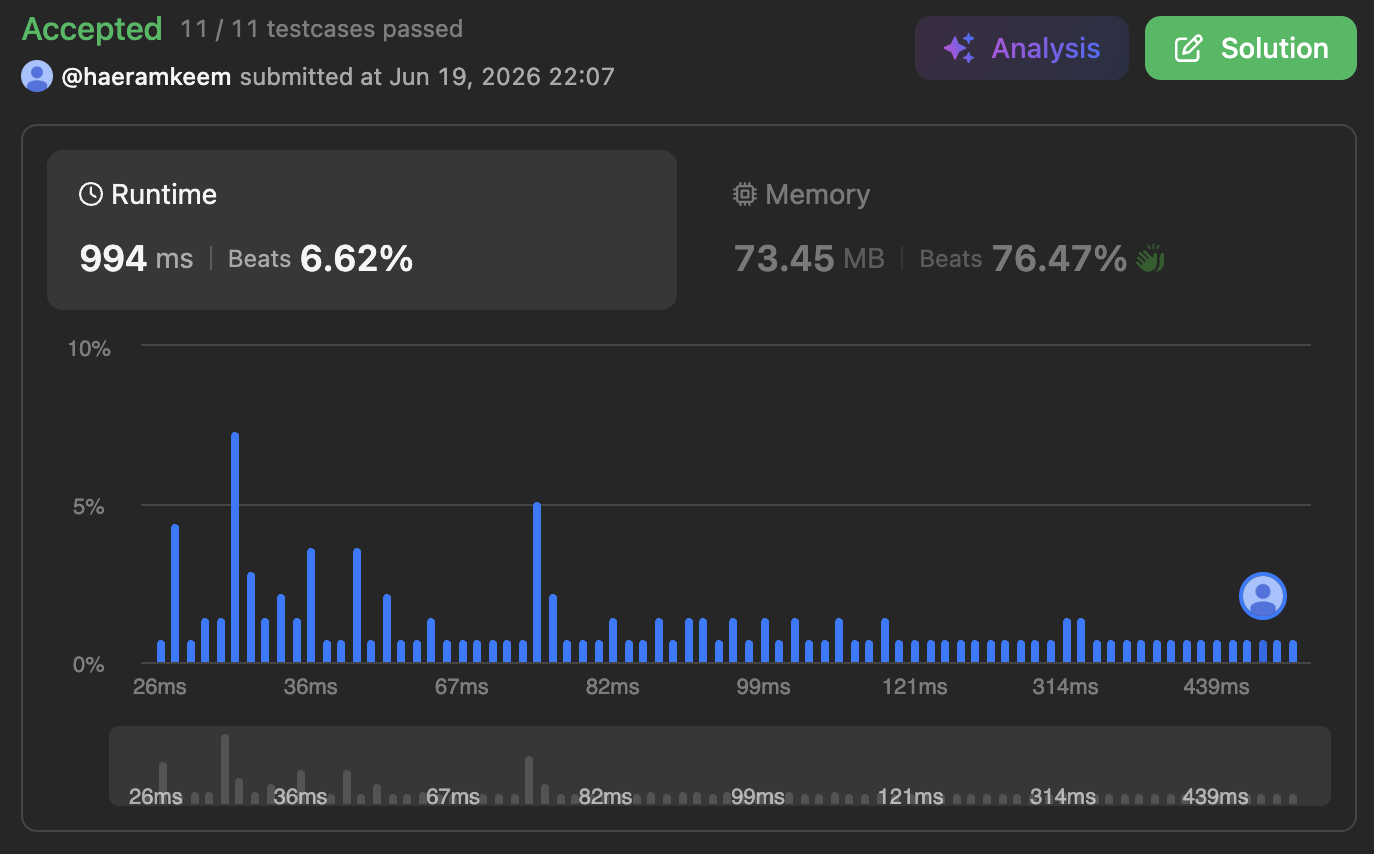
코드
#define bms unsigned int

class Solution {
public:
	vector<int> findNumOfValidWords(vector<string>& words, vector<string>& puzzles) {
		map<bms, int> alphaset;
		vector<int> ans;

		for (auto &w : words) {
			bms ws = 0;

			for (char c : w) {
				ws |= 1 << (c - 'a');
			}

			if (alphaset.find(ws) == alphaset.end()) {
				alphaset[ws] = 0;
			}

			alphaset[ws]++;
		}

		for (auto &p : puzzles) {
			bms ps = 0;
			int cnt = 0;

			for (char c : p) {
				ps |= 1 << (c - 'a');
			}

			for (auto &as : alphaset) {
				if (as.first & (1 << (p[0] - 'a'))) {
					if ((as.first & ps) == as.first) {
						cnt += as.second;
					}
				}
			}

			ans.push_back(cnt);
		}

		return ans;
	}
};
- 돌려보면 통과하긴 한다. 다만 속도가 나락간다.
- 그리고 이 방법은 leetcode 에 등록된 testcase 에 대해서는 통과하지만, 통과하지 못할 경우의 수가 존재한다.
- map 에 들어갈 수 있는 bms 의 경우의 수는 이다. 영문 소문자의 개수가 23개이기 때문.
- 그래서 위의 방법으로 map 의 원소 각각에 대해
puzzles와 비교하면 최악의 경우 가 된다. 이건 못참쮜