문제 링크
요약
- 그냥 좌표를 하나하나 따라가는게 더 나을 수도 있다.
최종
결과
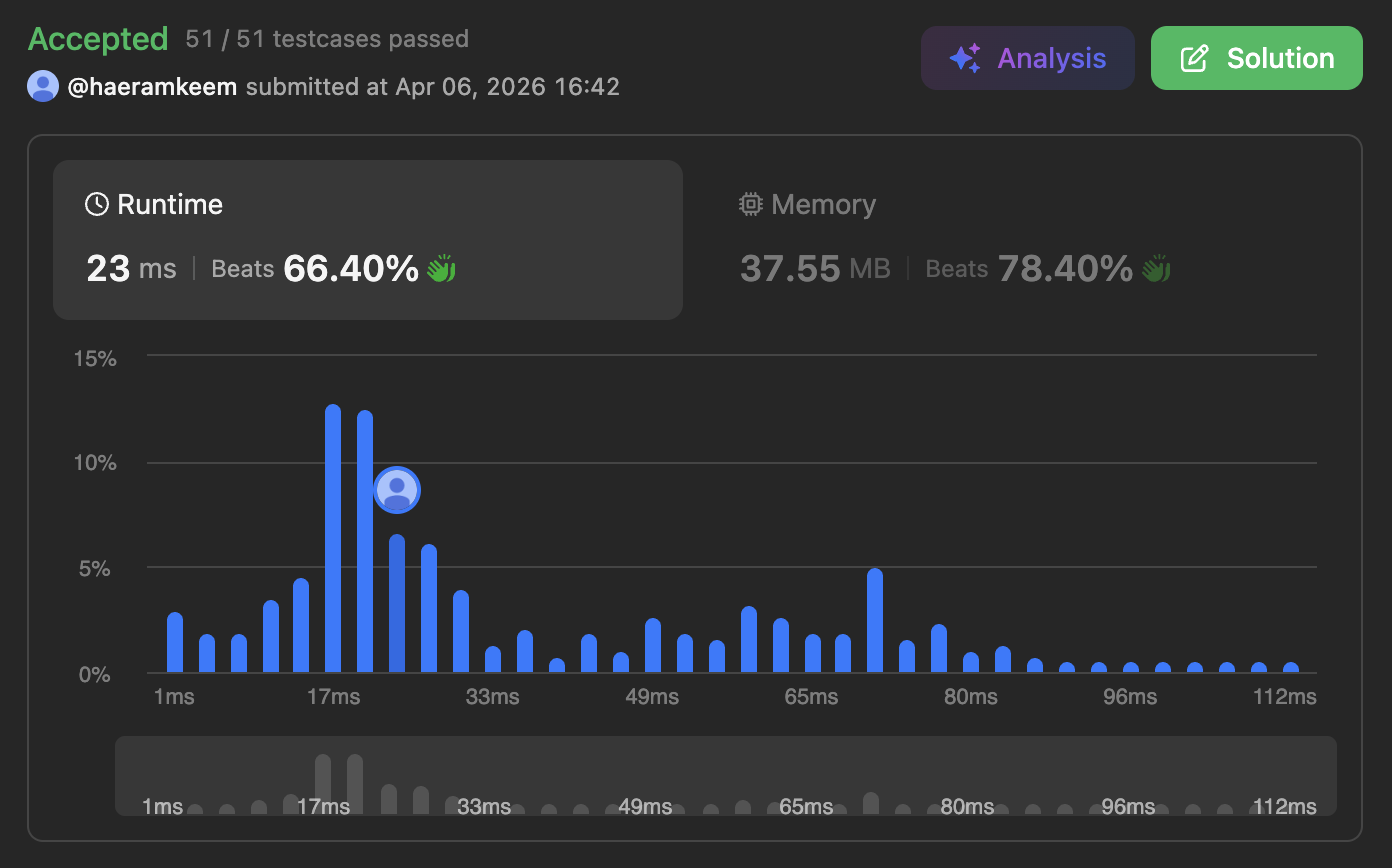
- 여기 에서는 움직이는 범위를 이용해 이 안에 obstacle 이 있나 찾는 방법으로 접근했는데, 해보니 통과되긴 하지만 너무 느리다.
- 그래서 다른사람 solution 을 보니 그냥 좌표를 1씩 움직이길래 그렇게하는게 더 빠른가 싶어서 해봤더니 확실히 더 낫긴 하다.
- 코드는:
#define PACK(x, y) (((x) << 16) | ((y) & 0xFFFF))
#define EUCLID(pos) ((pos)[0] * (pos)[0] + (pos)[1] * (pos)[1])
#define MAX(a, b) ((a) > (b) ? (a) : (b))

#define DIR_UP      (0)
#define DIR_RIGHT   (1)
#define DIR_DOWN    (2)
#define DIR_LEFT    (3)

class Solution {
private:
	static constexpr int direction_map[4][2] = {{0, 1}, {1, 0}, {0, -1}, {-1, 0}};

	int pos[2];
	int direction;
	int max_distance;
	set<int> obstacles;

	void init(vector<vector<int>> &obstacles) {
		pos[0] = 0;
		pos[1] = 0;
		direction = DIR_UP;
		max_distance = 0;

		for (auto &o : obstacles) {
			this->obstacles.insert(PACK(o[0], o[1]));
		}
	}

	void turnRight() {
		direction = (direction + 1) & 0x3;
	}

	void turnLeft() {
		direction = (direction - 1) & 0x3;
	}

	void move(int distance) {
		for (int i = 0; i < distance; i++) {
			int next[2];

			next[0] = pos[0] + direction_map[direction][0];
			next[1] = pos[1] + direction_map[direction][1];

			if (obstacles.find(PACK(next[0], next[1])) != obstacles.end()) {
				break;
			}

			pos[0] = next[0];
			pos[1] = next[1];
		}

		max_distance = MAX(max_distance, EUCLID(pos));
	}

	void act(int command) {
		switch (command) {
		case -2: turnLeft(); break;
		case -1: turnRight(); break;
		default: move(command); break;
		}
	}
public:
	int robotSim(vector<int>& commands, vector<vector<int>>& obstacles) {
		init(obstacles);

		for (auto c : commands) {
			act(c);
		}

		return max_distance;
	}
};
삽질 기록
결과
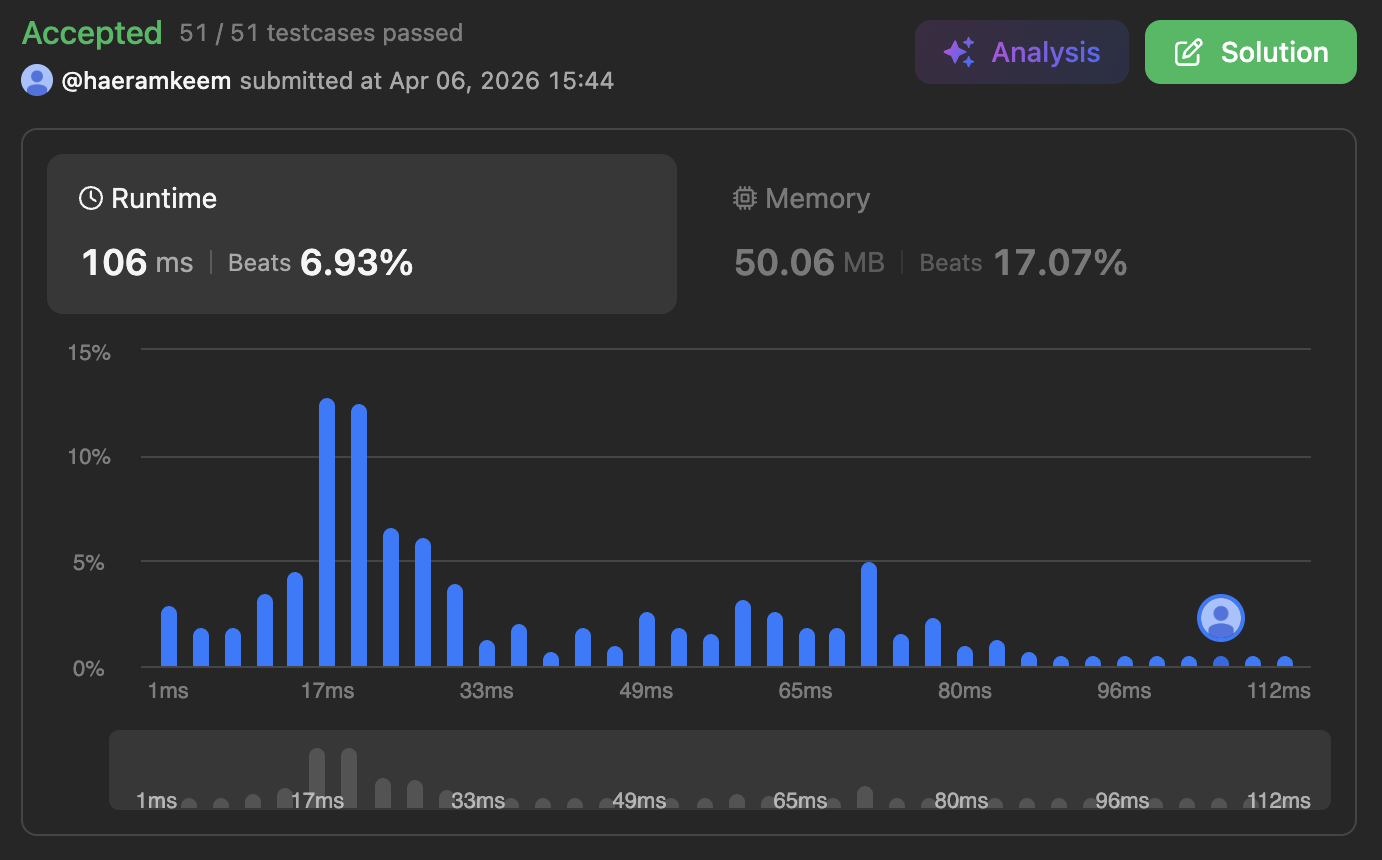
코드
#define DISTANCE(pos) ((pos)[0] * (pos)[0] + (pos)[1] * (pos)[1])
#define MAX(a, b) (a > b ? a : b)

#define DIR_UP      (0)
#define DIR_RIGHT   (1)
#define DIR_DOWN    (2)
#define DIR_LEFT    (3)

#define INVALID   (0x7FFFFFFF)

class Solution {
private:
	int pos[2];
	int direction;
	int max_distance;
	map<int, vector<int>> obstacles_xmap;
	map<int, vector<int>> obstacles_ymap;

	void init(vector<vector<int>> &obstacles) {
		pos[0] = 0;
		pos[1] = 0;
		direction = DIR_UP;
		max_distance = 0;

		obstacles_xmap.clear();
		for (auto &o : obstacles) {
			if (obstacles_xmap.find(o[0]) == obstacles_xmap.end()) {
				obstacles_xmap.emplace(o[0], vector<int>());
			}

			obstacles_xmap[o[0]].push_back(o[1]);
		}

		for (auto &o : obstacles_xmap) {
			sort(o.second.begin(), o.second.end());
		}

		obstacles_ymap.clear();
		for (auto &o : obstacles) {
			if (obstacles_ymap.find(o[1]) == obstacles_ymap.end()) {
				obstacles_ymap.emplace(o[1], vector<int>());
			}

			obstacles_ymap[o[1]].push_back(o[0]);
		}

		for (auto &o : obstacles_ymap) {
			sort(o.second.begin(), o.second.end());
		}
	}

	void turnLeft() {
		direction = (direction - 1) & 0x3;
	}

	void turnRight() {
		direction = (direction + 1) & 0x3;
	}

	int findMinInRange(vector<int> &sorted, int from, int to) {
		int target = INVALID;

		for (int s : sorted) {
			if (from <= s && s <= to) {
				target = s;
				break;
			}
		}

		return target;
	}

	int findMaxInRange(vector<int> &sorted, int from, int to) {
		int target = INVALID;

		for (int i = sorted.size() - 1; i >= 0; i--) {
			if (from <= sorted[i] && sorted[i] <= to) {
				target = sorted[i];
				break;
			}
		}

		return target;
	}

	void forward(int unit) {
		switch (direction) {
		case DIR_UP: {
			int obstacle = findMinInRange(obstacles_xmap[pos[0]], pos[1], pos[1] + unit);
			cout << obstacle << endl;

			if (obstacle != INVALID) {
				if (pos[0] == 0 && pos[1] == 0 && obstacle == 0) {
					pos[1] += unit;
				} else {
					pos[1] = obstacle - 1;
				}
			} else {
				pos[1] += unit;
			}
		}
		break;
		case DIR_RIGHT: {
			int obstacle = findMinInRange(obstacles_ymap[pos[1]], pos[0], pos[0] + unit);

			if (obstacle != INVALID) {
				if (pos[0] == 0 && pos[1] == 0 && obstacle == 0) {
					pos[0] += unit;
				} else {
					pos[0] = obstacle - 1;
				}
			} else {
				pos[0] += unit;
			}
		}
		break;
		case DIR_DOWN: {
			int obstacle = findMaxInRange(obstacles_xmap[pos[0]], pos[1] - unit, pos[1]);

			if (obstacle != INVALID) {
				if (pos[0] == 0 && pos[1] == 0 && obstacle == 0) {
					pos[1] -= unit;
				} else {
					pos[1] = obstacle + 1;
				}
			} else {
				pos[1] -= unit;
			}
		}
		break;
		case DIR_LEFT: {
			int obstacle = findMaxInRange(obstacles_ymap[pos[1]], pos[0] - unit, pos[0]);

			if (obstacle != INVALID) {
				if (pos[0] == 0 && pos[1] == 0 && obstacle == 0) {
					pos[0] -= unit;
				} else {
					pos[0] = obstacle + 1;
				}
			} else {
				pos[0] -= unit;
			}
		}
		break;
		}

		max_distance = MAX(max_distance, DISTANCE(pos));
	}

	void act(int command) {
		switch (command) {
		case -2: turnLeft(); break;
		case -1: turnRight(); break;
		default: forward(command);
		}
	}
public:
	int robotSim(vector<int>& commands, vector<vector<int>>& obstacles) {
		init(obstacles);

		for (int c : commands) {
			act(c);
		}

		return max_distance;
	}
};
- 위에서 말한 그 느린 코드.